
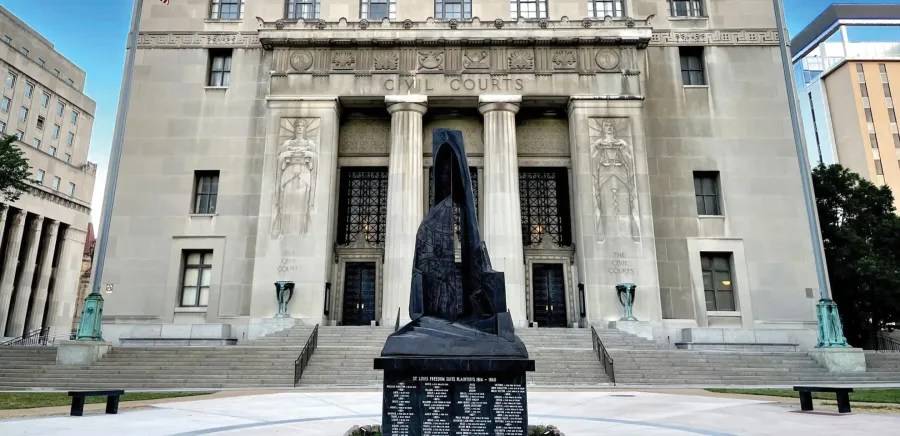
Besides the Dred Scott lawsuit, which is why the St. Louis Courthouse is listed as a site on the National Underground Railroad in St. Louis, many other famous and not-so-famous people bravely resisted slavery and sought freedom through the courts of law. Those freedom suits, which were heard in the St. Louis Courthouse, tell such a gigantic story that they deserve a memorial. And in 2022, the Freedom Suits Memorial Foundation dedicated a beautiful monument to do just that. That monument is one of the 14 listings in the St. Louis Region that is part of the National Underground Railroad Network to Freedom.
Their website explains the history as follows:
Between the Louisiana Purchase and the Emancipation Proclamation, more than 300 enslaved people demanded their freedom in the St. Louis circuit court. The legal cases that resulted from these efforts are known as “freedom suits.” Freedom suits had emerged in other jurisdictions, but St. Louis became home to one of the largest collections of such cases in the United States. Enslaved people’s right to sue for their freedom was established in Missouri’s territorial and state laws. Those who filed suit asserted that they were legally free people who had been deprived of their liberty, and initiated cases by petitioning the St. Louis Circuit Court for permission to sue. Plaintiffs made a variety of different arguments about why they were entitled to freedom. A small number asserted that they were descended from Native American women who lived west of the Mississippi River, where the enslavement of native people had been made illegal by the Spanish in the eighteenth century. Many more alleged that they had been made free in some kind of earlier agreement. A former enslaver, for example, had manumitted them or declared them free in their will. In other instances, plaintiffs had entered into a contract with an enslaver to purchase their own freedom and had held up their end of the bargain. The majority of plaintiffs, however, asserted that they were free because they–or their mothers–had previously traveled to and resided in free territories and states. The legal theory they relied on, called “once free, always free,” held that an enslaved person who had been moved to a free territory or state for any length of time who was then returned to a slave territory or state was entitled to their freedom. From https://stlfreedomsuits.org
I strongly urge you to visit their website https://stlfreedomsuits.org/ where you will find more about the people and their stories who sought their freedom in the St. Louis Courthouse. There are also educational plans for teachers who want to encourage young people to learn more about Missouri’s history and the Freedom Suits. This is one of 14 listings in St. Louis on the National Underground Railroad Network to Freedom. September is International Underground Railroad Month.


Leave a comment